
Choosing the right merchant services can materially affect a local business’s margins and operations. Concord and Walnut Creek—two Bay Area hubs—show meaningful differences in rates, fees, and the payment solutions local merchants lean on. This article breaks down those differences and highlights the options businesses should consider for 2026.
We focus on the practical details that matter to shop owners, restaurateurs, and service providers: fee ranges, setup and monthly costs, top processors and POS systems, and the trends shaping payments in each city. By the end, you’ll have a clear, actionable view of the merchant service landscape for Concord and Walnut Creek.
Rate differences between Concord and Walnut Creek can influence a merchant’s bottom line. Variations come from local competition among providers, the service bundles offered, and the types of businesses in each market. Understanding those differences helps owners choose the right partner.

Concord merchants typically pay between 2.5% and 3.5% per transaction, which incorporates interchange charges and processor markup. Walnut Creek averages slightly higher—about 3.0% to 4.0%. These gaps often reflect provider density and competitive pressure: more local options tend to push rates down.
Initial equipment and setup fees in Concord commonly run $200–$500 depending on terminal choice and installation needs. Walnut Creek merchants can expect $300–$600 in comparable circumstances. Monthly platform or maintenance fees generally fall near $25–$50 in Concord and $30–$75 in Walnut Creek. These differences add up, so factor them into longer-term cost models.
Choosing a processor is as much about features and support as it is about price. Both cities host solid providers, but preferences shift based on local business mix—brick-and-mortar retailers, restaurants, or e-commerce-first operations.
Concord businesses often favor Square for its ease of use and transparent pricing, especially for smaller storefronts. PayPal is strong for merchants needing broad online reach and buyer protection. Clover stands out for retailers that need integrated inventory and staff management. Each option trades some flexibility for simplicity or specialized features.
Walnut Creek tends to lean toward Shopify for merchants focused on seamlessly blending online and offline sales. Authorize.Net is popular when businesses require a flexible API and custom integrations. WorldPay remains a competitive choice for hybrid in-store and online processing, though some merchants report slower support response times compared with other vendors.
A POS choice should match business workflows—payment types, inventory complexity, and service model. Both markets offer modern terminals and cloud-based solutions; the right fit depends on priorities like inventory depth, kitchen management, or mobility.
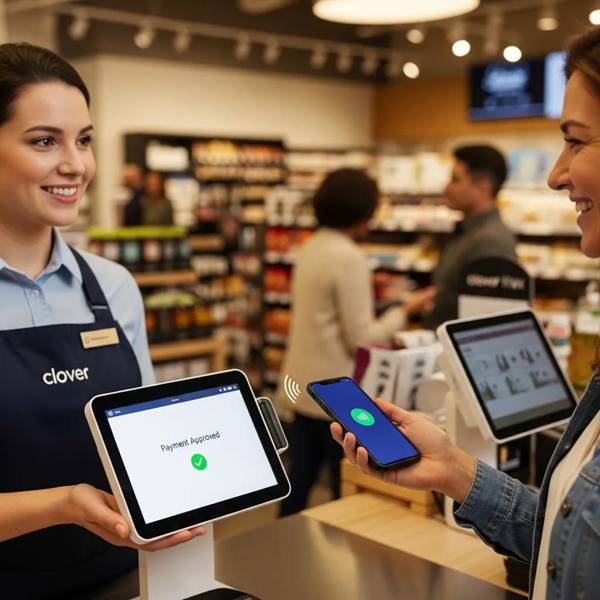
Concord merchants commonly deploy Clover Flex and Square Terminal to accept NFC and contactless payments. These systems enable wireless checkout, mobile lanes, and quick contactless taps—features that speed transactions and improve customer flow.
Walnut Creek retailers and restaurants often use Lightspeed for sophisticated inventory controls and Toast for hospitality-specific features like table management and delivery integration. These platforms are suited to businesses that need advanced reporting and multi-location coordination.
Local business mix drives which payment features are prioritized. A neighborhood of service businesses will have different requirements than a shopping district with higher-ticket retail or a cluster of restaurants.
Concord sees heavy reliance on card payments and a steady move away from cash. Mobile wallets such as Apple Pay and Google Wallet are increasingly accepted, and many merchants support contactless tap-and-go to match consumer preferences for speed and hygiene.
Walnut Creek merchants tend to optimize terminals and gateways for omni-channel selling—linking in-store, online, and marketplace sales. That integration helps with inventory accuracy, unified reporting, and improved customer experiences across channels.
Merchant feedback highlights differences in perceived value: price transparency and fast support often translate to higher satisfaction, while unclear billing and slow helpdesk response lower confidence.
On balance, Concord merchants report higher satisfaction, citing clearer fee breakdowns and more responsive account support. Some Walnut Creek merchants note occasional service delays and fee changes that erode trust—making contract terms and SLA clarity important considerations.
Both markets grapple with complex fee structures and intermittent hidden charges. Merchants recommend vetting contracts, requesting full fee disclosures, and comparing effective rates (not just headline percentages) to avoid surprises.
As payments evolve, providers are adapting product suites and pricing models. Expect continued consolidation in features and more emphasis on analytics, fraud prevention, and platform integration through 2026.
Competition and volume discounts are likely to keep downward pressure on per-transaction fees for high-volume merchants. Providers will continue to experiment with hybrid pricing—subscription plus reduced per-transaction rates—for predictable revenue streams and better merchant economics.
Look for tighter integration between POS and e-commerce platforms, broader AI-driven fraud detection, and improved analytics that surface actionable insights—helping High Risk Pay Merchants reduce loss and better target marketing or inventory buys.
Concord is home to service businesses, local retailers, and casual dining; Walnut Creek has a larger share of upscale retail, boutiques, and strong e-commerce presence. Those mixes influence which payment and POS features are most helpful.
Reduce fees by comparing providers, negotiating effective rates (including interchange pass-through options), and considering subscription plans that lower per-transaction costs. Consolidating services with a single provider can also unlock better pricing.
Yes. Providers like PayPal and Square offer lowered-fee options and donation tools for non-profits, plus features for event ticketing and recurring gifts. Local providers may also offer custom pricing—check with vendors for non-profit plans.
Mobile payments grow as consumers favor convenience and contactless options. Merchants are responding by enabling mobile wallets, NFC-enabled terminals, and one-click checkout flows for digital channels.
Local and state rules affect tax collection, fee disclosure, and data handling. Merchants should stay current on sales tax rules and data privacy regulations like CCPA, and ensure their payment providers support compliant reporting and secure data practices.
Common measures include EMV chip acceptance, AVS and CVV verification for card-not-present transactions, real-time monitoring, and staff training on fraud indicators. Combining multiple layers of protection reduces risk.
Start by mapping your sales channels, projected volume, and must-have features (e.g., inventory, delivery, online checkout). Then compare pricing models, contract terms, and customer support reputation. Ask for references from similar local businesses to confirm performance and reliability.