
Repairing Business Credit Without Hurting Daily Operations
Business credit problems create bigger issues than most owners expect. Funding becomes harder to secure. Payment processors begin adding restrictions. Vendors reduce flexibility and approvals start taking longer than they should.
For many businesses, the situation becomes even harder when the company operates in a higher-risk industry.
At High Risk Pay Merchants the focus stays on helping businesses understand the business credit repair process and timeline in a practical way. Credit repair is not an overnight solution. It involves correcting reporting issues, rebuilding payment history and creating stronger financial consistency over time.
Business credit issues develop gradually.
Late payments, inaccurate reporting, chargebacks, financial setbacks and inconsistent account activity all affect how lenders and processors evaluate risk. Some businesses also discover reporting errors that continue lowering scores long after the original issue should have been corrected.
Companies operating in industries viewed as higher risk face even stricter financial reviews during underwriting.
That is why business credit repair should focus on long-term stability instead of temporary score improvements.
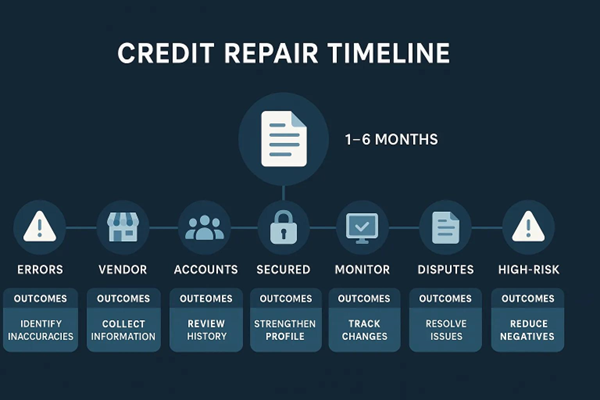
Repairing business credit involves several connected steps rather than one single fix.
The first stage begins with reviewing reports from agencies like Dun & Bradstreet, Experian Business and Equifax Business. Incorrect balances, outdated accounts, duplicate entries or reporting mistakes should be disputed immediately.
Once reporting errors are addressed, businesses begin rebuilding positive activity through vendor relationships, secured credit products and stronger payment consistency.
At High Risk Pay Merchants many business owners seeking merchant account solutions are also working toward improving their financial standing at the same time.
The business credit repair timeline depends heavily on the current condition of the company profile.
Some reporting disputes may be corrected within a month while larger financial problems take longer to improve. Businesses with multiple negative accounts or inconsistent payment history need more time to rebuild lender confidence.
Several factors commonly affect how quickly progress happens:
Reporting errors and dispute complexity
Existing payment history
Vendor reporting activity
Current outstanding debt
Chargeback or collections history
Financial account consistency
Businesses that stay organized and respond quickly during disputes see smoother progress.
Credit reporting mistakes are more common than many businesses realize.
Incorrect account balances, duplicate trade lines, outdated collections and inaccurate payment records can continue damaging scores unless they are disputed properly. Businesses should review reports carefully and keep documentation ready before filing corrections.
Most reporting agencies investigate disputes within approximately 30 days although more complex cases may take longer.
Tracking communication and maintaining organized records becomes important throughout the process.
Building Positive Credit Activity Again

After correcting inaccurate records, businesses focus on rebuilding positive reporting activity.
Vendor credit accounts help because suppliers report payment behavior directly to business credit bureaus. Secured business credit cards and smaller financing products can also help establish more reliable account history when payments remain consistent.
Businesses rebuilding credit should focus heavily on payment timing.
Even smaller accounts contribute positively when they are maintained responsibly over time.
One issue that slows credit improvement is poor separation between business and personal finances.
Dedicated business bank accounts and payment processing systems create cleaner financial reporting and make underwriting reviews easier later. Processors and lenders evaluate how organized the business appears operationally before extending approvals.
Clear account structure also improves recordkeeping during disputes and financing reviews.
Businesses working with High Risk Pay Merchants strengthen both payment processing stability and financial organization together during the rebuilding process.
Payment processing stability becomes important during business credit recovery.
Businesses dealing with frozen funds, high chargeback activity or processor restrictions struggle to maintain consistent cash flow. High-risk merchant accounts help reduce some of that operational pressure by providing payment solutions designed around industries that traditional processors frequently decline.
Some of the ways these accounts support recovery include:
More stable payment acceptance
Chargeback management tools
Fraud monitoring systems
Better transaction tracking
Flexible underwriting for higher-risk industries
Reliable payment processing helps businesses maintain stronger financial consistency while rebuilding credit.
Business credit should be reviewed consistently even after improvements begin appearing.
Monitoring services help businesses identify reporting changes, unexpected account activity or new inaccuracies before they create larger problems. Companies rebuilding credit benefit from monthly reviews because faster responses reduce long-term damage from reporting mistakes.
The goal is not only improving scores.
Long-term account health and stronger financial credibility matter just as much.

Some businesses handle the repair process independently while others work with specialists when disputes or underwriting problems become more complicated.
The right support depends on how severe the reporting issues have become and how quickly the business needs financial stability restored.
At High Risk Pay Merchants the focus stays on helping businesses strengthen both payment processing reliability and long-term financial standing without creating unnecessary complications during recovery.
If your business is facing credit challenges, payment processing restrictions or underwriting problems, High Risk Pay Merchants can help you explore solutions designed to support long-term financial recovery.
The timeline depends on reporting issues, payment history and how quickly disputes are resolved. Some corrections happen within weeks while broader recovery may take several months.
Yes. Businesses can dispute incorrect balances, outdated records, duplicate accounts and other reporting errors with major business credit agencies.
Yes. Vendors that report payment activity can help strengthen business credit when invoices are paid consistently and on time.
Processors and lenders often apply stricter financial reviews to industries with elevated chargeback exposure or transaction risk.
Stable payment processing can improve cash flow consistency and help businesses maintain stronger financial records during the rebuilding process.