

Choosing the right payment gateway has big operational and security consequences for any business. This guide breaks down hosted and API gateways: how they work, where each excels, and the trade-offs you should weigh so you can match the solution to your risk profile, team capacity, and growth plans.
We compare core features—security, compliance, cost, and customer experience—and offer practical recommendations for small merchants and enterprise platforms. By the end, you’ll have a clear framework to decide which gateway type aligns with your priorities.
Hosted gateways send customers to an external, provider-managed payment page to complete checkout. They minimize the merchant’s exposure to cardholder data and simplify security. API gateways, by contrast, embed payment flows directly into your site or app via code, giving you full control of the experience but placing more security and compliance responsibility on your team.
The essential distinction is control versus simplicity: hosted gateways reduce merchant risk and development needs; API gateways enable customization and tighter brand integration but require stronger technical and compliance resources.

Hosted gateways typically follow these steps:
This separation of payment handling simplifies PCI scope for merchants because the gateway controls most sensitive data processes.
API integrations require development work to embed payment flows and connect to the gateway’s services. Typical tasks include:
API gateways deliver a seamless, branded checkout and advanced features, but they demand ongoing investment in security and maintenance.
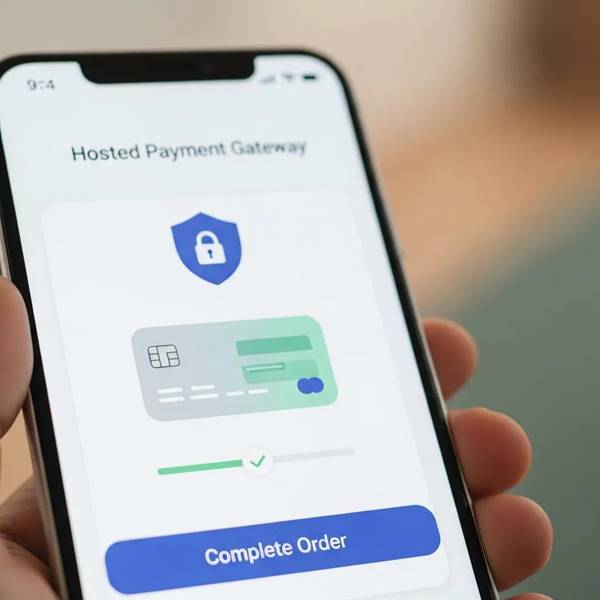
Hosted gateways are often the fastest path to secure online payments. Below are the primary benefits and common limitations to consider.
Key advantages include:
For small and growing merchants, hosted gateways provide a secure, low-effort way to accept payments.
Consider these trade-offs:
These constraints may push larger or brand-driven businesses toward API solutions.
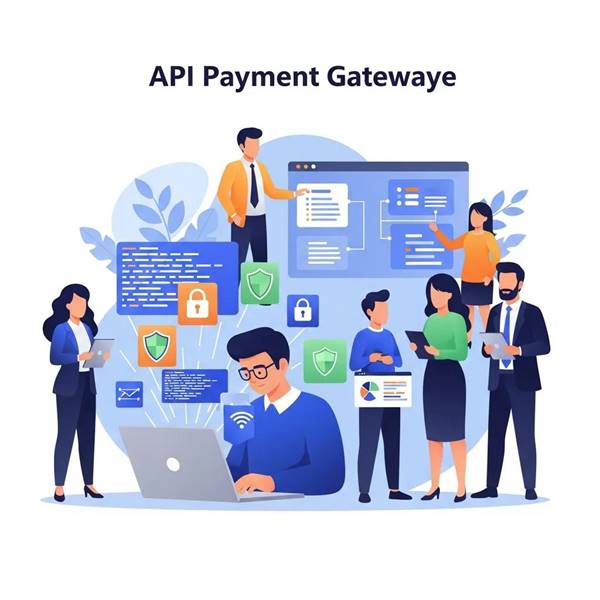
API gateways give merchants control and flexibility, but they come with technical and security responsibilities. Below are the main strengths and costs.
API gateways offer:
These capabilities are valuable for platforms that need tailored payment logic and richer data.
Main drawbacks include:
Smaller merchants without engineering resources often find these demands prohibitive.
Security posture and compliance responsibilities shift depending on gateway type. Understanding the practical differences helps you build an appropriate risk strategy.
Hosted gateways reduce merchant exposure by isolating payment collection, and many providers maintain strict encryption and compliance controls. API gateways can be equally secure when implemented correctly, but they place the burden of secure coding, tokenization, and compliant infrastructure on the merchant.
Recent PCI guidance emphasizes stronger authentication, data minimization, and continuous validation. Key points include:
Both hosted and API options must align with these standards, though hosted solutions typically simplify compliance work for merchants.
Pricing varies by provider and usage. Below are typical structures to help estimate costs.
Common hosted gateway fees include:
Watch for additional charges—chargeback fees, international processing, or feature add-ons—that can increase total cost.
API pricing tends to be more variable and may include:
For high-volume businesses, API pricing can be optimized but requires careful cost modeling.
Pick a gateway based on your team’s technical capacity, compliance tolerance, user experience goals, and growth trajectory.
Small businesses and startups usually benefit from hosted gateways: faster launch, lower upfront costs, and reduced PCI scope. Hosted solutions let you accept payments securely with minimal engineering effort while you validate product-market fit.
API gateways are a better fit when you need complete control over checkout, advanced payment features, or integration with internal systems. They scale with your business but require investment in development, security, and compliance.
Evaluate your business size, developer resources, security responsibilities, cost sensitivity, and desired checkout experience. Choose hosted for speed and simplicity; choose API for customization, advanced features, and tighter brand control.
Yes. Migration is common but requires planning for data transfer, customer tokens, and compliance updates. Coordinate rollout to avoid disrupting live transactions and ensure your team can support the new integration.
Hosted gateways redirect customers offsite, which can interrupt the flow and reduce branding control. API gateways enable a seamless, on-site checkout that typically improves conversion and keeps the customer within your brand experience.
API gateways expose merchants to risks if APIs, storage, or servers aren’t properly secured. Risks include data breaches, improper token handling, and misconfigured infrastructure. Strong security practices and regular audits are essential.
Yes. Industries prioritizing user experience—marketplaces, subscription services, and large ecommerce sites—often prefer API gateways. Small retailers, service providers, and high-risk merchants with limited engineering support commonly opt for hosted gateways to reduce operational overhead.
API gateways can be faster because they avoid redirection, but both types are capable of low-latency processing when implemented well. The real difference is usually in perceived speed and friction during checkout rather than raw authorization time.
Hosted gateway providers tend to offer merchant-focused support—live chat, account help, and managed services. API providers usually offer developer resources, detailed docs, SDKs, and technical support for integrations. Choose the support model that matches your team’s needs.
The right gateway depends on your priorities: minimize risk and time-to-market with hosted solutions, or invest in API integrations for control and advanced features. Assess your compliance obligations, developer capacity, and customer experience goals to decide. If you need help evaluating options for your specific business, consult our resources or reach out to High Risk Pay Merchant team for guidance.