As Concord companies expand beyond local markets, handling international payments becomes a core operational challenge. Choosing the right tools and workflows reduces costs, speeds settlements, and lowers compliance and FX risk. This guide breaks down practical payment solutions for Concord businesses—covering multi‑currency accounts, fee optimization, regulatory obligations, FX risk management, and API integrations—so you can streamline cross‑border receipts and payouts while protecting margins.

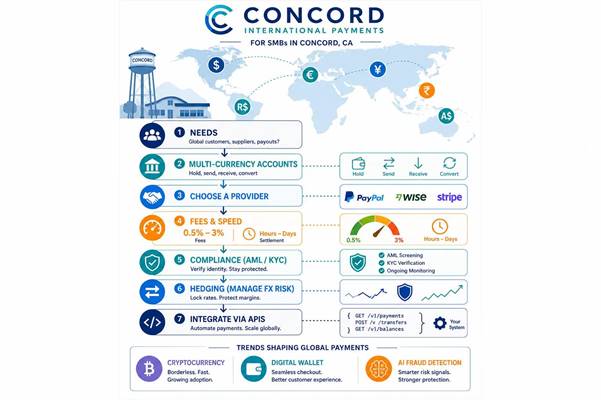
Multi‑currency accounts let Concord businesses hold balances in several currencies, avoiding needless conversions and providing operational flexibility. The primary benefits are lower FX fees, improved cash management, and a smoother customer experience for international buyers and suppliers.
By keeping funds in the currency of invoicing or payment, businesses limit conversion events and associated markup. That means you can take advantage of favorable rates, choose timing for conversions, and avoid multiple conversion spreads that erode margin.
Several global and regional providers support multi‑currency accounts with different tradeoffs around pricing, speed, and integration. Compare feature sets and pricing from providers like PayPal, Wise, and Stripe to match your transaction patterns and tech stack.
Optimizing costs and transfer times requires a mix of provider selection, operational design, and routing choices. Small changes—batching payments, choosing local rails, or leveraging FX specialists—can materially lower fees and shorten settlement windows.
Fees vary by provider and corridor: expect effective costs roughly in the 0.5%–3% range depending on currency pairs and rails, with settlement from near‑real‑time to several business days. Mapping fee structures and expected timing by corridor helps you pick the right method for each payment type.
Negotiate volume or fixed‑fee pricing, use multi‑currency balances to avoid conversions, consolidate payments, and route through lower‑cost corridors. Working with FX specialists or integrated payment platforms often yields better economics than standard bank transfers.
Compliance is non‑negotiable. Understanding domestic AML/KYC obligations and the rules of counterparties’ jurisdictions prevents service interruptions and regulatory penalties.
Concord businesses must comply with U.S. AML and KYC requirements and any reporting obligations tied to the countries they transact with. Cross‑border activity can trigger additional filings or enhanced due diligence depending on the counterparty and corridor.
Adopt encryption, tokenization, and strong access controls. Run regular security audits, train staff on compliance and fraud indicators, and use providers that offer robust monitoring and dispute‑resolution workflows.
FX volatility can quickly erode projected margins. Understanding exposure and applying appropriate hedging strategies preserves predictability in costs and pricing.
Common risks include sudden rate moves, thin liquidity in certain corridors, and timing mismatches between invoicing and settlement. These can create unexpected costs or cash‑flow shortfalls without proper oversight.
Tools include forward contracts to lock rates, options to cap downside while retaining upside, and swaps for longer‑term exposure management. Choose instruments that fit your cash‑flow profile and treasury capabilities.
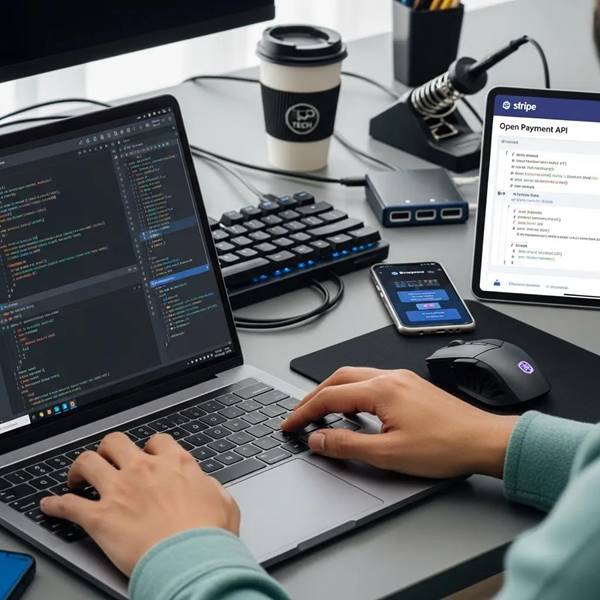
API integration automates FX selection, routing, reconciliation, and notification flows—reducing manual work and settlement errors while improving customer experience and reporting accuracy.
APIs deliver faster authorization, automated reconciliation, and centralized reporting. They enable programmable routing rules and give finance teams real‑time visibility into international flows.
Major platforms such as PayPal, Stripe, and Square provide APIs for global payouts, multi‑currency processing, and reconciliation. Evaluate documentation, SDKs, and support to ensure smooth developer implementation.
Below are answers to frequently raised operational and strategic questions Concord businesses face when scaling international payments.
Reduce fees by negotiating with providers, consolidating payments, using multi‑currency accounts, and selecting lower‑cost rails for specific corridors. Regularly review provider pricing versus transaction patterns.
Yes—when held with regulated banks or reputable providers and paired with standard security controls. Vet providers for licensing, insurance, and strong compliance practices.
Evaluate transaction fees, supported currencies and corridors, security and compliance posture, integration options, and responsiveness of customer support. Also assess settlement speed and reporting capabilities to match your accounting needs.
Use integrated accounting and payment dashboards that provide real‑time status, automated reconciliation, and exportable reports. Regular reconciliations and exception workflows reduce errors and simplify audits.
Key trends include broader digital wallet adoption, corridor‑specific stablecoins and rails, blockchain settlement pilots, and AI‑based fraud and compliance monitoring. Monitor these developments for cost or speed advantages in targeted markets.
Implement multi‑factor authentication, continuous transaction monitoring, and provider‑level fraud tools. Maintain employee training programs and clear escalation paths for suspicious activity.
Yes. Supporting local currencies and preferred payment methods removes friction for international customers and suppliers, improving conversion and enabling new revenue streams.
Strong support accelerates problem resolution, clarifies compliance requirements, and helps recover funds or correct routing errors—minimizing operational impact on your business.
Effective international payment strategy combines the right accounts, providers, and processes to protect margins and speed operations. Concord businesses that align payment rails, compliance, and FX risk management will operate more efficiently and compete more effectively overseas. Review your corridors, negotiate terms, and consider API automation to start improving cross‑border performance today.