
Building solid business credit is a vital step for any Concord company that wants reliable access to financing, better supplier terms, and greater financial stability. This guide explains what business credit is, why it matters for local businesses, and practical steps you can take to build and use it to grow. Many small business owners miss opportunities because they rely on personal credit or haven’t developed a business credit profile. The good news: with a clear plan and the right vendor relationships, you can create a strong business credit footprint quickly. Below we cover actionable steps, recommended vendors, and real Concord examples that show how credit-building works in practice.
Business credit is the ability of a company to borrow or obtain trade credit based on the business’s own financial behavior, separate from the owner’s personal credit. It’s essential because it unlocks loans, lines of credit, and vendor terms that help operations, cash flow, and growth. Good business credit often translates into lower interest rates and better borrowing capacity — critical advantages for companies that need to scale or manage seasonal swings. In short, understanding and building business credit is a strategic move for long-term stability.
A strong business credit profile makes lenders and suppliers more willing to extend credit or offer favorable terms. That access can fund inventory purchases, equipment upgrades, or expansion projects with lower costs. When your business shows consistent payment behavior and responsible credit use, it gains leverage to negotiate better rates and higher credit limits — which in turn supports faster, safer growth.

Net 30 accounts allow a business to buy goods or services and pay within 30 days. When vendors report timely payments to business credit bureaus, those accounts help build a positive credit history. Net 30 terms improve cash flow management while demonstrating reliability to creditors. Typical vendors offering net 30 include office suppliers and trade vendors — the kind of partners that can help a Concord business build credit without adding immediate cash strain.
Building business credit quickly means following a focused sequence of steps and keeping disciplined payment habits. Start by registering a formal business entity (LLC or corporation) to separate personal and business obligations. Next, create a business credit profile by registering with major bureaus and obtain a federal Employer Identification Number (EIN). Open a dedicated business bank account to route transactions that establish your credit history.
To build a credible business credit profile, follow these core steps:
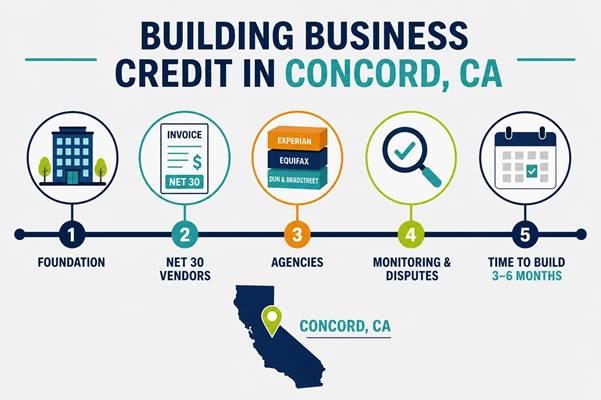
These foundational moves demonstrate to lenders and vendors that your business is organized and creditworthy.
Local vendors are often the fastest way to start a trade credit history. Establish relationships with suppliers that offer net 30 terms and confirm they report payment activity to business credit bureaus. By purchasing regularly and paying on time, you build a record of reliable payments. Local office supply stores, maintenance suppliers, and trade vendors commonly work with neighborhood businesses and can help you build credit while meeting everyday needs.
Choosing vendors that report to credit bureaus and supply items you regularly use is the most effective strategy. Mixing local suppliers with national vendors diversifies your credit footprint and increases the likelihood that payments will be recorded by reporting agencies.

Vendors that commonly offer net 30 terms include:
These options are useful starting points for businesses aiming to build credit while meeting operational needs.
Use vendor trade credit strategically: keep balances low relative to available credit, pay invoices on time, and ask vendors to report payments if they don’t already. Monitor your reported accounts so you know which suppliers contribute to your score. Strong vendor relationships can also lead to higher credit limits and better terms as your payment history improves.
Credit agencies evaluate businesses using factors like payment history, credit utilization, outstanding public records, and company size. These elements combine to form a score that lenders reference during credit decisions. Knowing the evaluation criteria helps you prioritize which behaviors to improve to raise your score.
The main business credit bureaus are:
Each agency collects data differently, so it’s important to review reports from multiple sources to get a full picture.
Check your business credit reports regularly to catch errors, spot trends, and measure progress. Focus on on-time payments, low utilization, and adding diverse credit types. If you find inaccuracies, dispute them promptly. Staying proactive with monitoring and record-keeping produces steady score improvements.
Concord businesses have used net 30 accounts and consistent payment habits to expand operations and qualify for larger financing. These local examples show how a methodical approach to vendor relationships and record-keeping can create real growth opportunities.
Local companies report tangible benefits from net 30 accounts: better cash flow management, improved supplier access, and higher credit scores that opened the door to larger loans. For example, a catering business increased its purchasing capacity during busy seasons by leveraging vendor credit responsibly, which helped scale its operations quickly.
Key takeaways from Concord businesses include:
Following these practices consistently yields measurable benefits over time.
With disciplined payment behavior and active reporting accounts, many businesses see noticeable credit improvement within three to six months. Timelines vary by the number and type of accounts, how often they’re reported, and the consistency of payments.
California businesses can benefit from several services that support credit-building:
These services give owners tools and advice to manage credit growth more confidently.
Insurers may review business credit to assess risk. A strong credit profile can lead to lower premiums because it signals financial responsibility, while a weak profile may increase costs. Keeping credit healthy helps control insurance expenses.
Yes. Especially for newer or smaller businesses, lenders often consider the owner’s personal credit when evaluating risk. As your business credit history grows, lenders rely more on the company’s profile, but maintaining good personal credit remains important.
Common myths include the idea that new businesses can’t build credit or that business credit is always tied to personal credit. In reality, new businesses can establish credit through vendor accounts and reported payments, and business credit is assessed on the company’s own financial behavior.
Review your business credit reports at least annually; quarterly checks are better if you’re actively building credit or preparing for financing. Regular reviews help you catch errors and respond quickly to changes.
Besides establishing business credit, explore small business loans, grants, and crowdfunding. Local grants and community funding initiatives may also be available in Concord and can supplement capital needs without increasing debt.
Gather supporting documents and file a dispute with the reporting agency online or by phone. Provide clear evidence of the error and follow up until the agency resolves the issue — typically within 30 days.
Establishing and growing business credit gives Concord businesses access to better financing, supplier terms, and long-term stability. By forming the right entity, using vendor credit responsibly, and monitoring reports, you can build a strong credit profile that supports future growth. Start applying these strategies today and explore High Risk Pay Merchants resources to tailor a credit plan that fits your business needs.