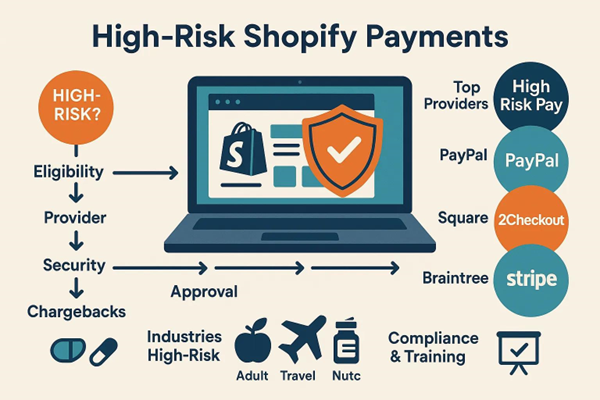
Payment Processing Built for Shopify Stores That Face Higher Risk Reviews
Running a Shopify store becomes difficult when payment processors suddenly place holds on payouts or restrict transactions without much warning. This happens in industries considered higher risk because of recurring billing, larger order values, international sales or elevated dispute activity.
Many Shopify businesses grow quickly but still struggle to maintain stable payment processing as transaction volume increases.
That is where High Risk Pay Merchants helps.
Instead of relying on short-term approvals that later create payout problems, high-risk Shopify merchant accounts are designed for businesses that need more consistent processing support from the start.
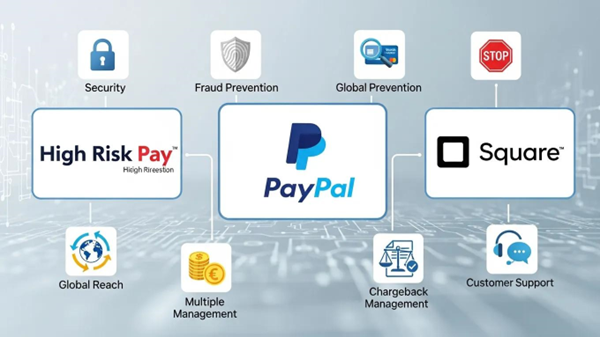
Traditional processors prefer businesses with predictable transaction patterns and lower dispute activity.
Shopify stores operating in subscription billing, coaching, digital products, supplements, travel services, ticket sales and similar industries face stricter review standards. Sudden sales spikes can also trigger account investigations even when the activity itself is legitimate.
In many cases, processors become concerned about:
Chargeback exposure
International payment activity
Recurring billing models
High ticket transactions
Rapid sales growth.
That does not automatically mean the business is unsafe. It simply means the processor sees more financial exposure tied to the account.
Many Shopify businesses begin processing payments normally before problems appear later.
Some merchants experience frozen payouts during busy sales periods while others suddenly lose access to payment gateways after dispute rates increase. Even temporary holds can create serious cash flow problems for ecommerce businesses handling inventory and fulfillment daily.
Some of the most common issues include:
Account shutdowns after chargeback increases
Delayed payouts during processor reviews
Gateway restrictions tied to industry type
Sudden transaction monitoring holds
High Risk Pay Merchants focuses on solutions structured specifically for those situations instead of treating them as unusual exceptions.
A high-risk Shopify merchant account should support business growth instead of limiting processing flexibility every time sales increase.
That includes fraud protection systems, dispute monitoring, stable gateway integration and processing structures that match how Shopify stores actually operate. Businesses handling recurring subscriptions or international orders especially benefit from payment systems built around higher transaction exposure.
At High Risk Pay Merchants, the focus stays on helping Shopify sellers maintain reliable processing conditions as transaction volume scales over time.
Approval alone is not enough. Long-term stability matters far more once the store begins growing consistently.
Chargebacks create problems quickly for ecommerce businesses.
Processors closely monitor dispute percentages because higher refund activity increases financial exposure for the payment provider. Shopify stores selling digital products or subscription services experience this more heavily than standard retail businesses.
Businesses reduce disputes more effectively when they maintain:
Clear product descriptions
Visible billing details
Faster customer support responses
Transparent refund policies
Strong order tracking and communication also help merchants respond to disputes more successfully later.
Reducing preventable chargebacks improves both payment stability and long-term processor relationships.
High-risk ecommerce businesses are expected to maintain stronger fraud prevention standards from the beginning.
Processors review customer verification systems, PCI compliance readiness, fraud monitoring tools and transaction security measures during underwriting. Stores handling recurring billing or international transactions require additional review because unauthorized payment activity becomes more common in those environments.
Reliable payment infrastructure protects revenue while helping reduce future account interruptions.
That becomes especially important once advertising campaigns and transaction volume begin increasing.
The underwriting process depends on how clearly the Shopify business presents its operations during review.
Processors request:
Business registration documents
Bank statements
Product or service details
Refund policies
Website compliance pages
Processing history if available
Incomplete information slows approvals and creates additional underwriting concerns. Businesses with organized documentation move through the process more efficiently.
Underwriters mainly want to understand how the store operates and how transaction risk will be managed moving forward.
Not every processor handles Shopify businesses the same way.
Some providers restrict certain industries heavily while others support subscription billing, digital products, coaching businesses or international ecommerce more effectively. Reserve structures, funding schedules and dispute management support also vary between providers.
The lowest processing rate does not always create the best long-term setup.
For many Shopify merchants, payment reliability and responsive support become far more important once monthly transaction volume begins increasing steadily.

Shopify stores operating in higher-risk industries need payment systems that continue working reliably as the business grows.
At High Risk Pay Merchants, the focus stays on helping ecommerce businesses secure processing solutions designed around real transaction conditions instead of forcing stores into low-risk structures that later become unstable.
Whether the business operates through subscriptions, digital services, coaching programs or international ecommerce sales, the goal remains straightforward — provide payment processing support that helps Shopify merchants scale with fewer interruptions and stronger account stability.
If your Shopify store has experienced payout holds, processor rejections or account instability, High Risk Pay Merchants can help you explore solutions built specifically for higher-risk ecommerce businesses.
Processors classify stores based on industry type, recurring billing activity, dispute exposure or transaction behavior.
Yes. Many new ecommerce businesses qualify if documentation and business details are prepared properly during underwriting.
Certain ecommerce industries experience higher dispute rates because transactions happen online without face-to-face customer interaction.
Yes. Many high-risk processors support gateway integrations compatible with Shopify stores.
Approval timing depends on the business type, processing history and underwriting review requirements.