How to pick the right payment partner for your business

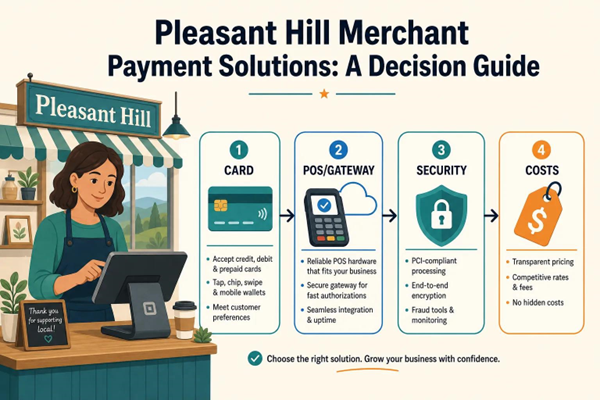
Selecting the best merchant payment solution is a critical decision for Pleasant Hill businesses. With many providers and product types available, knowing the differences between card processors, POS systems, and payment gateways helps you choose a solution that fits your operations and customers. This guide breaks down service types, essential POS features, and how to evaluate gateways, plus local cost considerations, security practices, and support options. Armed with this information, you can match technology to your business needs and stay competitive as customer expectations evolve.
Pleasant Hill merchants can choose from a broad set of payment services designed for different transaction types and business sizes. The main categories are credit card processing, POS systems, and payment gateways. Each option brings specific capabilities that can improve transaction speed, reporting, and customer satisfaction.
Credit card processing lets you accept cards electronically and involves several steps: a terminal or online form captures card data, the processor requests authorization to verify funds, and — if approved — the transaction is settled. Understanding each step is important because security and fraud protection measures are applied throughout the flow to safeguard both your business and your customers.
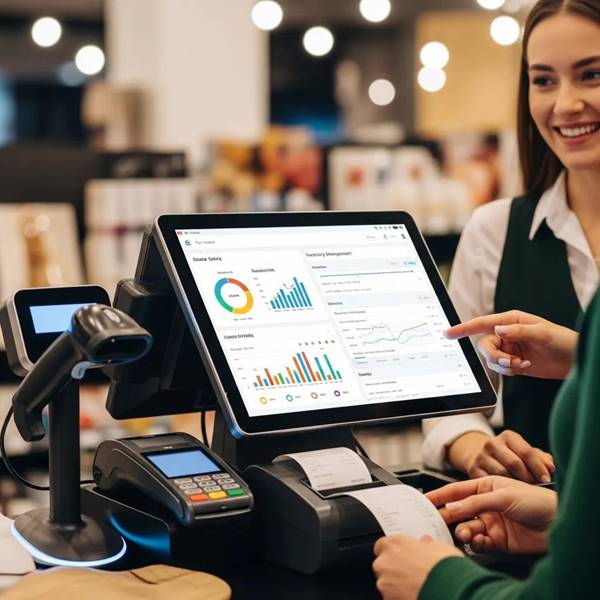
Contemporary POS systems used locally offer core features that streamline day-to-day operations: inventory tracking, sales and profitability reporting, customer profiles, and integrated payment acceptance. Many systems also sync online and in-store sales, simplifying reconciliation and giving you a single view of performance across channels.
Several payment gateways support merchants in Pleasant Hill and neighboring Concord, each with different strengths for integration, security, and pricing. Choosing the right gateway depends on whether you need advanced fraud controls, easy e-commerce integration, or specialized support for in-person and remote sales.
When assessing gateways, prioritize robust encryption, proven PCI compliance, and comprehensive fraud detection tools. Also evaluate how well a gateway connects to your accounting, inventory, and e-commerce platforms — seamless integration reduces manual work and improves reliability across your systems.
Offering multiple payment channels lets customers pay the way they prefer — in person, online, or via mobile wallet — and opens up more sales opportunities. Adopting multi-channel payments helps businesses adapt to shifting consumer habits and keeps the checkout experience fast and convenient.
Cost considerations play a major role in selecting a payment provider. Knowing the typical fees and pricing models helps you forecast expenses and choose a plan that aligns with your transaction volume and margins.
Processing fees in Pleasant Hill vary by transaction type and pricing model. Expect a mix of percentage-based fees and fixed per-transaction charges. Common structures include tiered pricing, interchange-plus (which separates processor markup from card network fees), and flat-rate plans. Comparing estimates from multiple providers reveals which model is genuinely more cost-effective for your sales mix.
POS and gateway costs can include upfront hardware purchases, software licenses, or monthly subscription fees. Evaluate total cost of ownership — hardware, integration, maintenance, and support — rather than just the headline price. For many small businesses, subscription models reduce initial capital outlay while still delivering full-featured solutions.
Security and compliance directly impact risk exposure and customer trust. Adhering to established standards protects sensitive data and helps avoid costly breaches and regulatory penalties.
PCI DSS sets the baseline for handling cardholder data securely. Compliance reduces the likelihood of data breaches and associated fines, and signals to customers that you take their payment security seriously. Noncompliance can lead to penalties and lasting reputational harm.
Adopt end-to-end encryption, enable two-factor authentication for administrative access, and keep payment software up to date. Regular staff training on fraud indicators and secure handling of customer data also strengthens your defenses.
Contactless and mobile payments have seen rapid adoption, offering speed and convenience that customers expect. Integrating these options helps merchants deliver faster checkouts and modern payment experiences.
Mobile wallets like Apple Pay and Google Pay, along with NFC-enabled contactless cards, are widely used by Pleasant Hill customers. These methods reduce transaction time and are popular with tech-savvy shoppers who prioritize convenience and security.
To add mobile wallets, choose a processor that supports NFC and tokenization, train your staff on how to accept those payments, and promote the options in-store and online so customers know they’re available. Proper setup and clear communication encourage adoption and reduce friction at checkout.

Strong customer support and smooth integrations make implementation faster and reduce downtime. Look for providers that offer clear onboarding, local expertise, and reliable technical support.
Local providers often offer hands-on integration help, from initial setup and API support to staff training and ongoing troubleshooting. Their familiarity with regional business needs can speed deployment and tailor the solution to your operations.
Seek providers with documented response times, positive local reviews, and dedicated support channels like phone lines or account managers. References from other Pleasant Hill businesses are particularly useful when assessing responsiveness and problem resolution.
Evaluate transaction fees, security features, quality of customer support, and how well the provider integrates with your existing systems. Check local reputation and user reviews, and confirm the provider supports the payment methods and channels important to your customers.
Integrate payments with your POS, inventory, and accounting systems to eliminate manual reconciliation. Use automated invoicing and reporting, and train staff to handle common payment issues quickly to reduce checkout friction and speed service.
Ensure your site uses HTTPS/SSL, work with PCI-compliant gateways, enforce strong password policies, keep software updated, and provide employee training on phishing and fraud prevention. Regular security assessments help identify and remediate vulnerabilities.
There aren’t local regulations unique to Pleasant Hill beyond state and federal laws. However, all merchants must comply with PCI DSS and applicable consumer protection rules. Review state-level requirements and consult local business resources if you have questions.
Key trends include growing mobile wallet and contactless usage, tighter fraud prevention tools, and tighter e-commerce integration. Providers are also focusing on simpler reporting and omnichannel features that support both in-store and online sales.
Use payment data to analyze buying patterns, optimize inventory, and personalize marketing. Integrate transaction data with a CRM or analytics tools to turn sales insights into targeted promotions and improved customer retention.
Choosing the right merchant payment solution helps Pleasant Hill businesses improve customer experience and streamline operations. Compare service types, costs, security features, and support options to find the best fit for your business. With the right partner and technology in place, you can simplify payments, reduce risk, and focus on growth.