Business Bank Accounts for High-Risk Merchants

Businesses labeled as high risk often run into roadblocks when opening business bank accounts. Those hurdles come from the industry a company operates in, transaction patterns, and how banks view the business model. This guide lays out practical steps high-risk merchants can take to secure appropriate banking, understand underwriting decisions, and manage payment operations once approved. We cover industry classifications, common banking obstacles, recommended solutions, and actionable tips to improve your chances of approval.
Key Takeaways

      • High-risk merchant accounts support businesses with elevated chargeback or fraud exposure, providing tailored banking and processing options.

      • Industries commonly labeled high risk include e-commerce, travel, adult entertainment, and gambling.

      • High-risk merchants often face higher fees, application denials, and restricted banking features.

      • The approval workflow typically includes application submission, underwriting review, and a final approval or denial.

      • Cleaner financials, stronger credit profiles, and choosing providers experienced with high-risk clients improve approval odds.

      • High-risk payment gateways should include fraud detection, chargeback tools, and strong authentication features.

      • Compliance with PCI DSS and OFAC is essential to maintain legal and security standards for high-risk accounts.

      • Reduce chargebacks with clear return policies, swift customer support, and active transaction monitoring.

      • Keeping up with regulation changes and working with specialists helps high-risk merchants maintain stable banking relationships.

    What Defines a High-Risk Merchant Account and Who Needs One?

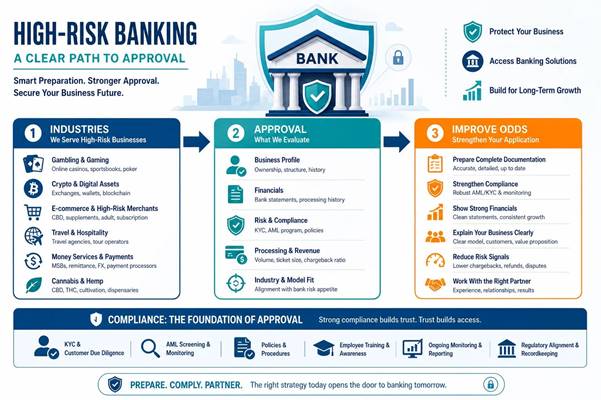
    A high-risk merchant account is built for businesses that present higher-than-average chances of chargebacks, fraud, or financial volatility. This label is common for sectors such as online gambling, adult content, travel services, and specific e-commerce models. These specialized accounts let merchants access payment processing and banking services that mainstream institutions often won’t provide. In short, a high-risk account helps businesses accept payments, manage cash flow, and meet compliance requirements that standard accounts may not cover.

    Which Industries Are Classified as High Risk for Business Banking?

    Certain industries attract a high-risk classification because of their business practices, customer behavior, or regulatory exposure. Typical high-risk categories include:

        • E-commerce: Rapid growth and remote transactions increase fraud and chargeback exposure.

        • Travel and Tourism: Seasonal revenue swings and frequent cancellations create chargeback pressure.

        • Adult Entertainment: Heightened scrutiny and social stigma can lead to service restrictions.

        • Gambling: Strict regulation and high transaction scrutiny make this sector high risk.

      Knowing where your business fits helps you target providers that understand and accept your industry-specific risks.

      What Are the Main Challenges Faced by High-Risk Merchants in Banking?

      High-risk merchants commonly run into three recurring issues when seeking banking partners:

          • Increased Fees: Processors and banks charge premiums to offset perceived risk.

          • Account Rejections: Applications are more likely to be denied, delaying access to services.

          • Limited Services: Some banks restrict features or integrations for high-risk accounts, which can hurt customer experience.

        A focused approach—clean documentation, targeted providers, and risk controls—helps navigate these hurdles.

        How Does the Merchant Account Approval Process Work for High-Risk Businesses?

        Understanding the approval steps lets merchants prepare stronger applications. Common stages include:

            • Application Submission: Provide detailed business information, processing history, and documentation.

            • Underwriting Assessment: The bank reviews revenue trends, chargebacks, industry risk, and compliance posture.

            • Approval or Denial: The provider issues a decision and, if denied, typically explains the main concerns.

          Preparing accurate records and addressing likely underwriting questions in advance improves your odds.

          What Underwriting Criteria Do Acquiring Banks Use for High-Risk Accounts?

          Acquirers evaluate high-risk applicants using several core criteria, such as:

              • Financial History: Revenue consistency and past chargeback performance are closely reviewed.

              • Credit Score: A solid credit profile strengthens your application.

              • Business Model Risk Assessment: Banks assess how your products, sales channels, and customer base affect risk.

            Anticipating these checks helps you present a clearer, more credible application.

            How Can High-Risk Merchants Improve Their Chances of Approval?

            There are practical steps merchants can take to boost approval likelihood:

                • Enhancing Financial Records: Keep organized, up-to-date statements, invoices, and reconciliation records.

                • Improving Credit Scores: Manage debt and pay obligations on time to show financial responsibility.

                • Choosing Specialized Providers: Work with banks and processors that have established high-risk programs.

              Combining thorough documentation with the right partners makes applications more compelling.

              What Are the Best Business Banking Solutions and Merchant Account Providers for High-Risk Merchants?

              Finding the right account means comparing providers that specialize in high-risk verticals. Look for partners that balance risk controls, service reliability, and transparent pricing to keep your business running smoothly.

              How to Compare Merchant Account Providers for High-Risk Payment Processing?

              When evaluating providers, prioritize these factors:

                  • Service Fees: Compare transaction, monthly, and contingency fees to understand true costs.

                  • Approval Rates: Seek providers with a track record of approving merchants in your industry.

                  • Customer Support: Reliable onboarding and ongoing support reduce friction and downtime.

                Choosing a provider that excels in each area reduces operational risk and unexpected costs.

                Which Acquiring Banks Specialize in High-Risk Business Account Services?

                Several providers have reputation and infrastructure to support high-risk merchants, including:

                    • PayPal – Offers various services that can fit some high-risk models, though with limitations.

                    • Square – Primarily mainstream, but adaptable in specific cases with transparent pricing.

                    • PaymentCloud – Focuses on high-risk merchants and tailors solutions to their needs.

                  These providers understand the rules and constraints in high-risk spaces and can often offer onboarding paths mainstream banks do not.

                  What Are the Leading Payment Processing Solutions and Gateways for High-Risk Merchants?

                  High-risk merchants need gateways and processors built to reduce fraud, manage disputes, and maintain compliance. The right stack protects revenue and customer trust while minimizing operational headaches.

                  How Do High Risk Payment Gateways Help Manage Fraud and Chargebacks?

                  Gateways designed for higher-risk businesses include features that lower fraud and dispute exposure:

                      • Fraud Detection Tools: Behavioral analysis and rules engines flag suspicious transactions in real time.

                      • Chargeback Management Systems: Workflows and evidence collection help you fight disputes efficiently.

                      • Secure Authentication: Protocols like 3-D Secure add layers of buyer verification to reduce liability.

                    Using these tools creates a safer transaction environment and reduces losses from fraudulent activity.

                    What Role Do Payment Processors Play in High-Risk Merchant Transactions?

                    Payment processors are central to how transactions flow and how risk is controlled. Their responsibilities include:

                        • Transaction Handling: Routing and settling payments reliably and securely.

                        • Financial Safeguarding: Implementing fraud checks and reserve management to protect both parties.

                        • Fee Management: Clarifying charges and helping you control processing costs.

                      Choosing a processor that aligns with your risk profile and service expectations is essential for stable operations.

                      What Regulatory and Compliance Requirements Affect High-Risk Business Banking in 2026?

                      Regulatory standards and compliance obligations shape how high-risk accounts are managed. Staying current on these rules reduces the chance of account closures or fines.

                      How Do PCI DSS and OFAC Regulations Impact High-Risk Accounts?

                      Two major compliance areas for high-risk merchants are:

                          • Mandating Security Protocols: PCI DSS requires strict controls around card data storage and transmission to prevent breaches.

                          • Ensuring Legal Compliance: OFAC rules prevent business with sanctioned parties and require screening processes.

                        Meeting these requirements is non-negotiable for maintaining processor relationships and avoiding penalties.

                        What Emerging Regulatory Changes Should Merchants Watch in 2026?

                        Keep an eye on regulatory trends that may affect high-risk operations:

                            • Increased Scrutiny: Regulators may increase oversight of high-risk sectors, prompting tighter compliance checks.

                            • Data Protection Laws: New privacy requirements can demand changes in data handling and storage.

                            • Evolving Payment Standards: Shifts in authentication and settlement rules could require technical updates.

                          Proactive compliance planning helps you absorb regulatory shifts without disrupting service.

                          How Can High-Risk Merchants Effectively Manage Chargebacks and Fraud Risks?

                          Chargeback prevention and fraud controls are core to keeping processing costs down and preserving account access. A layered strategy works best.

                          What Strategies Reduce Chargeback Ratios for High-Risk Merchant Accounts?

                          Practical steps to lower chargebacks include:

                              • Clear Return Policies: Publish unambiguous terms so customers know what to expect.

                              • Prompt Customer Service: Resolve complaints quickly to prevent disputes from escalating.

                              • Monitoring Transactions: Spot unusual patterns early and intervene before disputes pile up.

                            These measures reduce friction and protect your processing history.

                            Which Services Provide Chargeback Protection and Risk Mitigation?

                            Specialized vendors offer services that help defend revenue and manage disputes:

                                • Chargeback Gurus: Consulting and operational services focused on dispute prevention and recovery.

                                • Fraud Labs: AI-driven tools to detect and block fraudulent transactions.

                                • CNP Shield: Solutions tailored to protect card-not-present transactions common in e-commerce.

                              Working with trusted vendors can strengthen your defenses and streamline dispute handling.

                              Frequently Asked Questions

                              1. What are the most common types of fraud that high-risk merchants face?

                              High-risk merchants see a range of fraud types, including credit card theft, identity fraud, and chargeback (friendly) fraud. Card fraud uses stolen payment data; identity fraud creates fake accounts; chargeback fraud occurs when customers dispute legitimate charges. Knowing these threats guides prevention tactics and tool selection.

                              2. How can high-risk merchants choose the right payment processor?

                              Pick a processor with proven experience in your vertical, clear fee structures, and strong security practices. Evaluate onboarding timelines, integration options, and the provider’s reputation for supporting high-risk clients. If needed, consult specialists to match your business model to the right partner.

                              3. Are there specific insurance options available for high-risk merchants?

                              Yes. High-risk businesses can purchase policies like general liability, professional liability, and cyber insurance to protect against operational risks and data breaches. Premiums may be higher, but tailored coverage helps safeguard the business. Talk to brokers versed in high-risk sectors to find suitable policies.

                              4. What technology solutions can assist high-risk merchants in payment processing?

                              Useful technologies include machine-learning fraud detection, secure payment gateways with encryption, and CRM systems that track customer interactions. These tools reduce fraud exposure, streamline dispute responses, and improve customer service—lowering chargeback rates over time.

                              5. How can high-risk merchants stay updated on regulatory changes?

                              Subscribe to industry newsletters, follow regulatory agencies, and participate in conferences or webinars. Joining trade groups and consulting with legal or compliance experts ensures you receive timely alerts and practical guidance for adapting to new rules.

                              6. What are the benefits of working with a high-risk merchant consultant?

                              Consultants bring industry expertise to help you navigate underwriting, prepare documentation, and optimize processing setups. They can speed approvals, recommend compliance steps, and advise on dispute management—saving time and reducing costly mistakes.

                              7. What additional resources can high-risk merchants utilize for support?

                              Leverage peer forums, educational platforms, and professional networks focused on high-risk businesses. Legal and financial advisors with sector experience are valuable for bespoke advice. Combining peer insight with expert counsel builds a stronger operational foundation.

                              Conclusion

                              With the right preparation and partners, high-risk merchants can secure banking and payment solutions that support growth. Focus on clear financials, strong risk controls, and providers who understand your industry. Those steps, along with proactive compliance and chargeback prevention, improve approval chances and protect your business. Explore High Risk Pay Merchants specialized providers and expert resources to keep your payments running smoothly.

                              Send Us A Message

                              5starprocessing

                              Share: