Smarter Merchant Account Pricing Starts With Better Comparisons
High-risk payment processing costs can vary more than most businesses expect. A small difference in transaction fees or reserve terms can affect monthly revenue heavily once processing volume increases.
That is why businesses should compare merchant rates carefully before choosing a provider.
At High Risk Pay Merchants the goal is to help businesses find payment solutions that match their industry risk level without unnecessary pricing structures or hidden account costs.
Processors charge more when businesses operate in industries with elevated fraud exposure or higher dispute activity.
That additional risk increases underwriting pressure and financial exposure for the processor itself. Businesses operating in travel, subscription billing, digital products, gaming or certain ecommerce industries fall into higher-risk categories automatically.
Higher pricing reflects:
Chargeback exposure
Fraud risk
International transaction activity
Refund frequency
Industry regulations
That does not mean businesses should accept the first offer they receive. Merchant account pricing still varies heavily between providers.
Many merchants compare only transaction percentages and ignore other account charges that affect long term costs.
Monthly platform fees, reserve requirements, chargeback penalties, gateway costs and early termination clauses all affect total processing expense. Some providers advertise low rates while increasing costs through additional service fees later.
The most important part of comparison is understanding the full pricing structure before approval.
At High Risk Pay Merchants businesses receive clearer visibility into how processing costs are structured from the beginning instead of discovering hidden charges later.
Even small percentage differences create large annual costs once payment volume grows.
A business processing higher monthly sales may lose thousands yearly from rates that seemed minor during onboarding. That becomes even more noticeable for ecommerce businesses processing international orders or recurring billing transactions.
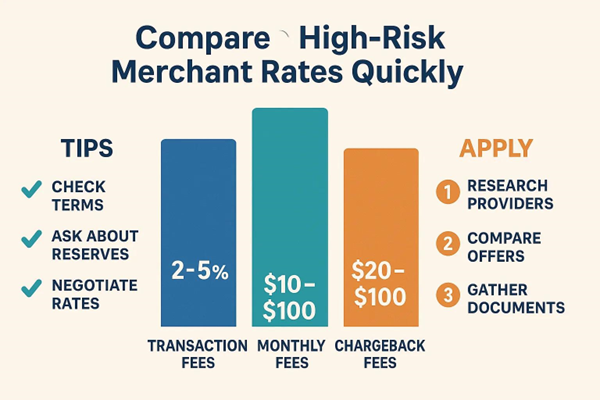
Merchants should evaluate:
Per transaction fees
Monthly account costs
Chargeback penalties
Rolling reserve structures
Gateway and compliance charges
Looking at total processing cost gives a more accurate picture than focusing only on advertised percentages
Some processors approve accounts quickly but later create payout delays or account restrictions once transaction volume increases.
That creates operational problems many businesses do not anticipate early.
A stronger provider relationship includes better communication, clearer underwriting expectations and more stable long term processing conditions. Businesses should evaluate account stability and support quality alongside pricing.
At High Risk Pay Merchants payment solutions are structured around long term business operations instead of temporary approvals that later become unstable.
Credit history matters during underwriting but it is not always the deciding factor.
Many high-risk providers evaluate business performance, transaction patterns and operational structure alongside financial history. Businesses with weaker credit profiles may still qualify for merchant accounts if supporting documentation and transaction activity remain consistent.
That flexibility becomes important for growing businesses rebuilding financial stability while maintaining daily payment operations.
Chargebacks remain one of the biggest reasons processing costs increase.
Businesses with rising dispute levels face higher reserve requirements or additional monitoring fees. Some accounts may face restrictions if chargeback ratios continue increasing without proper management.
Reducing disputes starts with stronger communication and clearer billing practices.
Fast customer support, visible refund policies and accurate transaction descriptions help businesses reduce preventable disputes before they become chargebacks.
High-risk businesses need payment solutions that remain stable as transaction activity grows.
At High Risk Pay Merchants the focus stays on helping merchants compare rates realistically while securing payment processing built around their industry type and operational needs. Instead of generic pricing structures businesses receive guidance based on transaction volume, processing history and long term scalability.
That approach helps merchants avoid unnecessary processing costs while maintaining more reliable payment acceptance.
High Risk Pay Merchants can help you review merchant account options built around higher-risk industries.
Processors charge more because higher-risk industries create increased fraud exposure and chargeback risk.
Transaction rates, monthly charges, reserve requirements and chargeback fees all affect total processing cost.
Yes. Many high-risk providers evaluate business activity and operational structure alongside credit history.
Yes. Higher dispute activity increases processing costs and reserve requirements over time.
Even small pricing differences can create large yearly costs once transaction volume begins increasing steadily.