Guide to Apply for a Business Credit Card Without Hurting Your Cash Flow
Many businesses apply for credit cards too quickly without understanding how lenders actually review applications. Some choose cards based only on rewards. Others apply to multiple providers at once and later struggle with repayments, low limits, or rejection.
A business credit card should support financial management and not create more pressure. When selected carefully it helps businesses organize expenses and improve cash flow flexibility also building stronger financial records over time.
This guide explains how business credit cards work, what lenders check before approval, and what businesses should focus on before applying.
Why Businesses Use Credit Cards in the First Place
Business expenses rarely stay predictable for long. Inventory costs change. Marketing budgets increase. Emergency purchases happen without warning.
A business credit card gives companies a financial buffer for those situations without interrupting daily operations.
For growing businesses, they are commonly used for:
- Supplier payments
- Fuel and travel expenses
- Marketing and advertising costs
- Software subscriptions
- Equipment purchases
- Employee spending management
The bigger advantage is financial organization. Separate business spending creates cleaner records and helps businesses understand exactly where money is going every month.
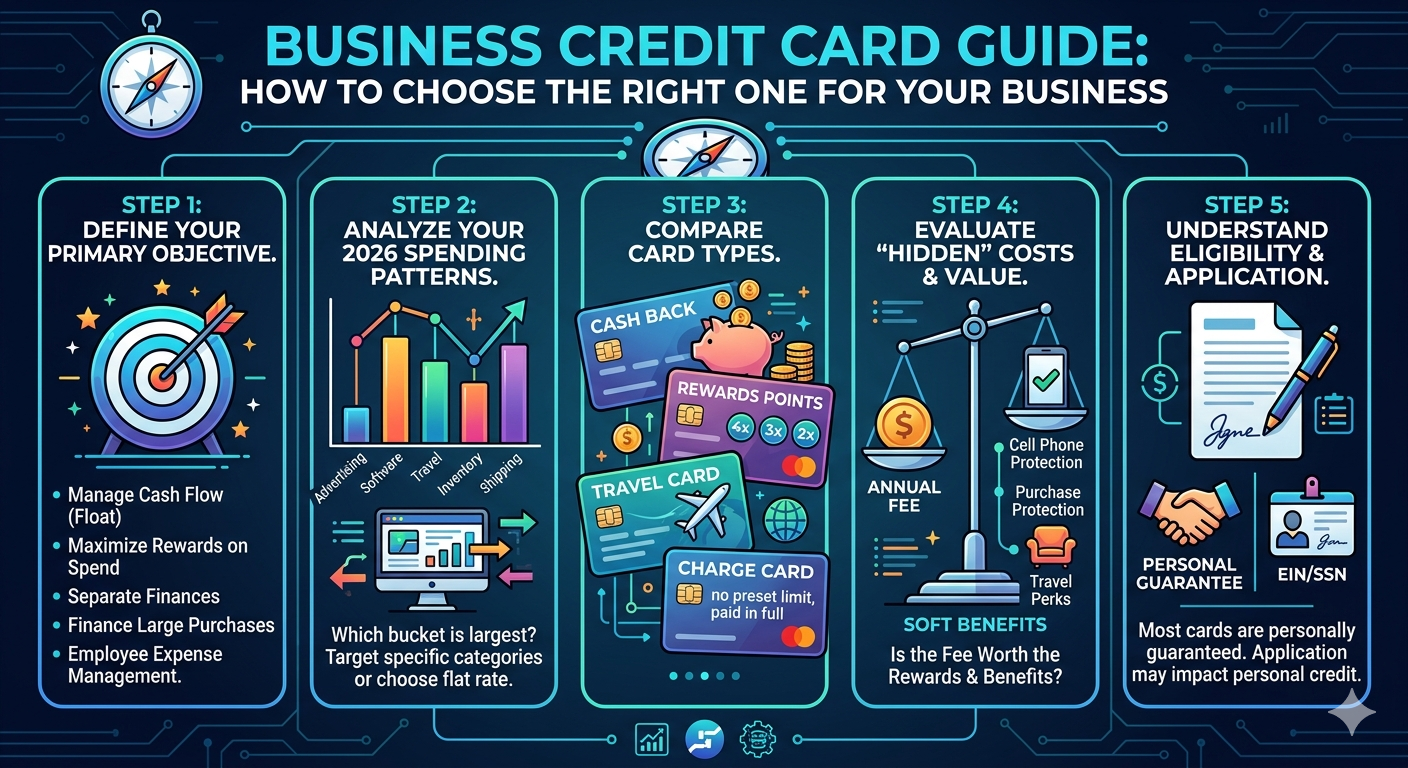
Start With the Real Purpose Behind the Application
Before comparing cards, businesses should first decide why they actually need one.
That sounds obvious, but many applications happen without clear planning. A company looking for lower interest rates may accidentally choose a rewards-heavy card with expensive fees. Another business may need higher limits but apply for a basic entry-level option instead.
The purpose behind the card changes which features actually matter.
Some businesses mainly need:
- Better short-term cash flow management
- Lower interest during large purchases
- Easier expense tracking
- Employee card access
- Business credit improvement
Without clarity, businesses end up using the wrong product for the wrong reason.
Why Lenders Look Beyond Revenue Alone
Many business owners assume approval depends only on income. In reality, lenders evaluate several financial signals together.
They review:
Credit History
Personal and business credit both matter in many applications. Missed payments, large debt balances, or repeated credit inquiries can affect approval chances.
Cash Flow Stability
Lenders prefer businesses showing consistent incoming revenue rather than unpredictable spikes.
Existing Debt
High existing obligations may reduce approval chances or lead to lower limits.
Time in Business
New businesses can still qualify, but established operations receive stronger offers and better terms.
Financial Organization
Clean financial records help lenders evaluate risk faster and with more confidence.
Even profitable businesses sometimes face delays simply because documents are incomplete or poorly organized.
Compare the Structure Behind the Card
Many businesses focus too heavily on reward marketing while ignoring the long-term cost structure.
The important details are inside the actual agreement.
Interest Rates Matter More Than Most Businesses Expect
If balances may carry over occasionally, even slightly higher APR rates can become expensive over time.
Lower interest structures help businesses maintain healthier repayment flexibility.
Annual Fees Should Match Usage
Some premium cards only make sense when businesses actually use the included benefits regularly.
Otherwise, the yearly fee becomes an unnecessary expense.
Credit Limits Affect Operational Flexibility
A limit that is too low can create operational issues during larger purchasing periods.
At the same time, businesses should avoid choosing limits they realistically cannot manage responsibly.
Introductory Offers Are Temporary
Many cards promote temporary 0% APR periods or bonus rewards. Those offers may help short term, but businesses should still evaluate the long-term structure after the promotional period ends.
Why Multiple Applications Can Create Problems
Submitting several applications within a short period may lower approval chances instead of improving them.
Every application creates a credit inquiry. Multiple inquiries can signal financial instability to lenders.
Instead of applying everywhere, businesses should:
- Review eligibility requirements first
- Compare financial terms carefully
- Focus on one or two realistic options
- Apply strategically rather than urgently
That approach protects credit standing and improves approval outcomes.
Separate Business Spending From Personal Spending Early
Many small businesses begin by mixing personal and business expenses together. That becomes difficult later when accounting with taxes and financial reporting becomes more complex.
Using a dedicated business credit card helps businesses:
- Organize transactions properly
- Simplify bookkeeping
- Improve financial visibility
- Track operational costs accurately
- Reduce confusion during tax preparation
It also creates a clearer financial identity for the business itself.
Payment Habits Matter After Approval
Getting approved is only the beginning. The real impact comes from how the account is managed afterward.
Late payments affect:
- Credit scores
- Interest costs
- Future borrowing opportunities
- Business credibility with lenders
Consistent repayment behavior strengthens the financial profile over time and improves access to future funding options.
Even businesses with moderate limits can build stronger financial credibility simply through responsible usage patterns.
Review the Terms Carefully Before Accepting
Many businesses accept offers without reading the full agreement properly.
That leads to unexpected costs later.
Businesses should always review:
- Interest structure
- Penalty fees
- Foreign transaction charges
- Cashback limitations
- Balance transfer conditions
- Minimum payment requirements
Understanding the full structure helps businesses avoid financial surprises later.
Documents Required During the Application
Lenders generally request standard financial and business records before approval.
Preparation helps speed the process significantly.
Typical requirements include:
Business Information
- Registered business name
- Business address
- EIN or registration details
- Ownership information
Personal Information
- Government identification
- Income details
- Credit history information
Financial Documents
- Bank statements
- Revenue records
- Existing debt information
- Profit and loss statements
Some lenders may request additional verification depending on business structure or industry type.
Common Mistakes Businesses Should Avoid
Several avoidable mistakes create unnecessary approval problems.
Applying Without Reviewing Credit Reports
Errors on reports sometimes affect approval decisions. Businesses should review credit information before applying.
Choosing Rewards Over Financial Practicality
Rewards only help when repayment stays manageable.
Ignoring Repayment Planning
A business credit card should support operations, not become long-term financial pressure.
Using Too Much Available Credit
High utilization can negatively affect credit performance even when payments remain current.
How Business Credit Cards Support Long-Term Financial Stability
Using a business credit card responsibly becomes more than a payment method.
It helps businesses:
- Maintain smoother operational spending
- Handle temporary cash flow gaps
- Build stronger financial records
- Improve purchasing flexibility
- Strengthen future financing opportunities
Over time, disciplined usage creates a more stable financial structure that supports growth without depending entirely on immediate cash reserves.
Conclusion
A business credit card should be viewed as a financial management tool rather than easy access to spending.
The right card can help businesses to improve cash flow flexibility and organize operational expenses. It also strengthens prolonged financial stability. Poor decisions can increase financial pressure and create repayment challenges that affect future growth.
Businesses that prepare properly before applying make stronger financial decisions in future. This includes understanding repayment responsibilities by comparing terms carefully and using credit strategically instead of impulsively.
High Risk Pay Merchants helps companies navigate business payment and credit-related challenges more effectively.
FAQs
Can a startup apply for a business credit card?
Yes. Many lenders approve startups and smaller businesses if they meet basic financial and identification requirements.
Does applying affect business credit scores?
Applications create a credit inquiry, which may temporarily affect scores. Responsible usage afterward can improve financial standing over time.
What is the biggest mistake businesses make while applying?
Applying without understanding repayment capacity or choosing cards based only on rewards creates problems later.
Are annual fee business cards worth it?
They can be worthwhile if the benefits genuinely match regular business spending patterns.
Why do lenders review personal credit for business cards?
Many lenders use personal credit to evaluate financial responsibility for smaller businesses or newer companies.
Should businesses carry balances every month?
Not necessarily. Paying balances early reduces interest costs and supports healthier financial management.