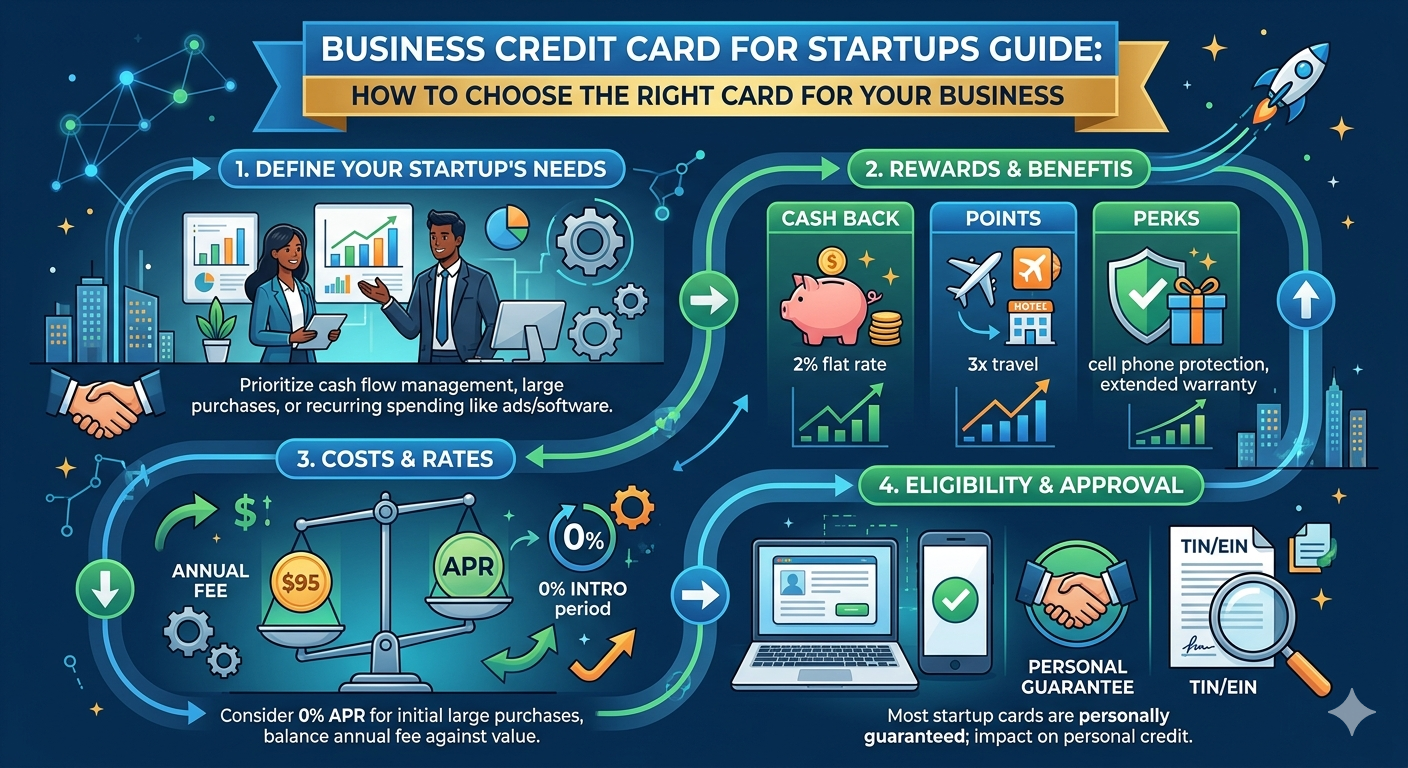
Startup Business Credit Cards in 2026: What New Businesses Get Wrong
Most startups do not struggle because they completely lack money. They struggle because spending starts happening faster than financial systems are built around it.
Subscriptions begin stacking up. Marketing costs increase. Vendor payments become irregular. Founders start using personal cards for operational expenses because it feels easier in the beginning.
That is where financial confusion starts.
This guide focuses on the practical side of startup business credit cards.
Why Startup Spending Becomes Difficult to Track So Quickly
Early-stage businesses spend money across too many areas at once.
One month may involve branding expenses. Another may involve advertising costs and software subscriptions. Some startups begin paying freelancers or purchasing equipment before stable revenue even exists.
Without organized payment systems, businesses lose visibility into spending patterns very quickly.
That creates problems like:
- Poor budgeting decisions
- Unclear operational costs
- Missed subscription charges
- Personal and business expense overlap
- Inconsistent cash flow tracking
A startup business credit card helps centralize operational spending so businesses can actually understand where money is going.
The Biggest Mistake Many Founders Make Early
Many startup owners treat business credit cards as emergency funding instead of operational tools.
That mindset creates long-term repayment pressure because businesses begin relying on revolving balances instead of building healthier cash flow habits.
A business credit card works best when it supports planned spending, not uncontrolled growth.
Startups using credit responsibly focus on:
- Controlled operational purchases
- Predictable repayment cycles
- Expense tracking
- Vendor payment management
- Financial organization
The businesses that struggle most are the ones using credit cards to continuously compensate for unstable financial planning.
Why Startup Business Credit Cards Matter Beyond Purchases
Many founders think business credit cards only help with transactions.
In reality, they help startups build financial systems earlier than they otherwise would.
That includes:
Better Financial Separation
Mixing business spending with personal purchases creates accounting problems later. Separate spending creates cleaner records and clearer operational visibility.
Easier Expense Management
Instead of reviewing scattered transactions from multiple accounts, businesses can monitor operational costs in one place.
Stronger Financial Documentation
Consistent records become valuable later during financing applications, investor discussions, or tax preparation.
Improved Business Credibility
Over time, responsible business credit usage helps strengthen the financial identity of the company itself.
Startup Business Credit Cards Are Not Always About Rewards
Many articles focus heavily on cashback or travel points, but most startups should care more about operational practicality.
A rewards-heavy card becomes less useful if:
- Interest rates are too high
- Fees become expensive
- Credit limits are restrictive
- Repayment flexibility is poor
For startups, the most valuable features are simpler:
- Expense tracking
- Lower operational costs
- Payment flexibility
- Clear reporting tools
- Employee spending controls
Rewards only become valuable when businesses already maintain strong repayment discipline.
Why Subscription Businesses Need More Spending Visibility
In 2026, many startups operate through recurring software and digital services.
That creates dozens of automatic payments every month.
Without proper tracking, businesses lose money through:
- Forgotten subscriptions
- Duplicate tools
- Unused software
- Overlapping operational platforms
A dedicated startup business credit card helps businesses review recurring operational costs more accurately.
Many startups discover unnecessary spending only after reviewing several months of centralized transaction history.
Employee Spending Becomes a Problem Faster Than Expected
Even smaller startups eventually deal with shared spending responsibilities.
Marketing teams purchase advertising tools. Operations teams order supplies. Remote employees handle software purchases.
Without controlled spending systems, oversight becomes difficult quickly.
Some business credit cards allow startups to:
- Set employee spending limits
- Track departmental purchases
- Review transactions individually
- Control operational spending access
That structure becomes important once startups begin scaling operations beyond a single founder.
Why Some Startups Struggle With Approval
New businesses sometimes assume approval depends only on revenue.
Lenders evaluate several areas together including:
- Personal credit history
- Existing debt levels
- Business structure
- Financial consistency
- Operational stability
Even profitable startups may struggle if financial records appear disorganized or applications happen too aggressively.
Applying for multiple cards within short periods creates additional approval difficulty.
What Startups Should Focus on Instead of Chasing Large Limits
Many founders become too focused on securing the highest possible credit limit.
In reality, startups benefit more from:
- Predictable repayment structures
- Lower operational costs
- Manageable utilization levels
- Consistent payment habits
Financial discipline matters more long term than aggressive borrowing flexibility.
Businesses that manage smaller limits responsibly build stronger financial credibility over time.
The Difference Between Useful Credit and Dangerous Debt
A startup business credit card becomes dangerous when operational spending grows faster than repayment ability.
Warning signs include:
- Carrying balances continuously
- Using credit for payroll survival
- Missing repayment dates
- Relying on credit to cover operational losses
At that point, the card stops functioning as a management tool and starts becoming financial pressure.
Healthy usage involves short-term operational flexibility while maintaining realistic repayment capacity.
Conclusion
A startup business credit card should help create financial structure during the most unpredictable stage of business growth.
The real value is not simply spending flexibility. It is the ability to organize operational costs, improve visibility into business spending, and build healthier financial habits while the company is still developing.
Startups that treat credit strategically create stronger long-term systems than businesses using credit only as emergency funding.
High Risk Pay Merchants provides solutions designed to support growing businesses managing evolving financial operations.
FAQs
Can startups qualify for business credit cards without large revenue?
Yes. Many lenders review personal credit history and overall financial responsibility alongside business information.
Why should startups avoid using personal cards for business expenses?
Mixed spending creates accounting confusion and weakens operational financial visibility.
Are rewards important for startup businesses?
Rewards help only when spending remains controlled and balances stay manageable.
Do startup business credit cards help build business credit?
Yes. Responsible usage may gradually strengthen the financial profile of the business.
What operational expenses are commonly placed on startup business credit cards?
Software subscriptions, advertising costs, equipment purchases, and operational spending are commonly managed through business credit cards.
Should startups apply for multiple cards early?
No. Too many applications within short periods may negatively affect approval opportunities later.