Truist Business Credit Card Guide for Small Businesses in 2026
Running a business means handling dozens of expenses. Without a proper financial system even small expenses become difficult to organize.
That is one reason many business owners look for simple business credit cards instead of overly complicated reward-heavy options.
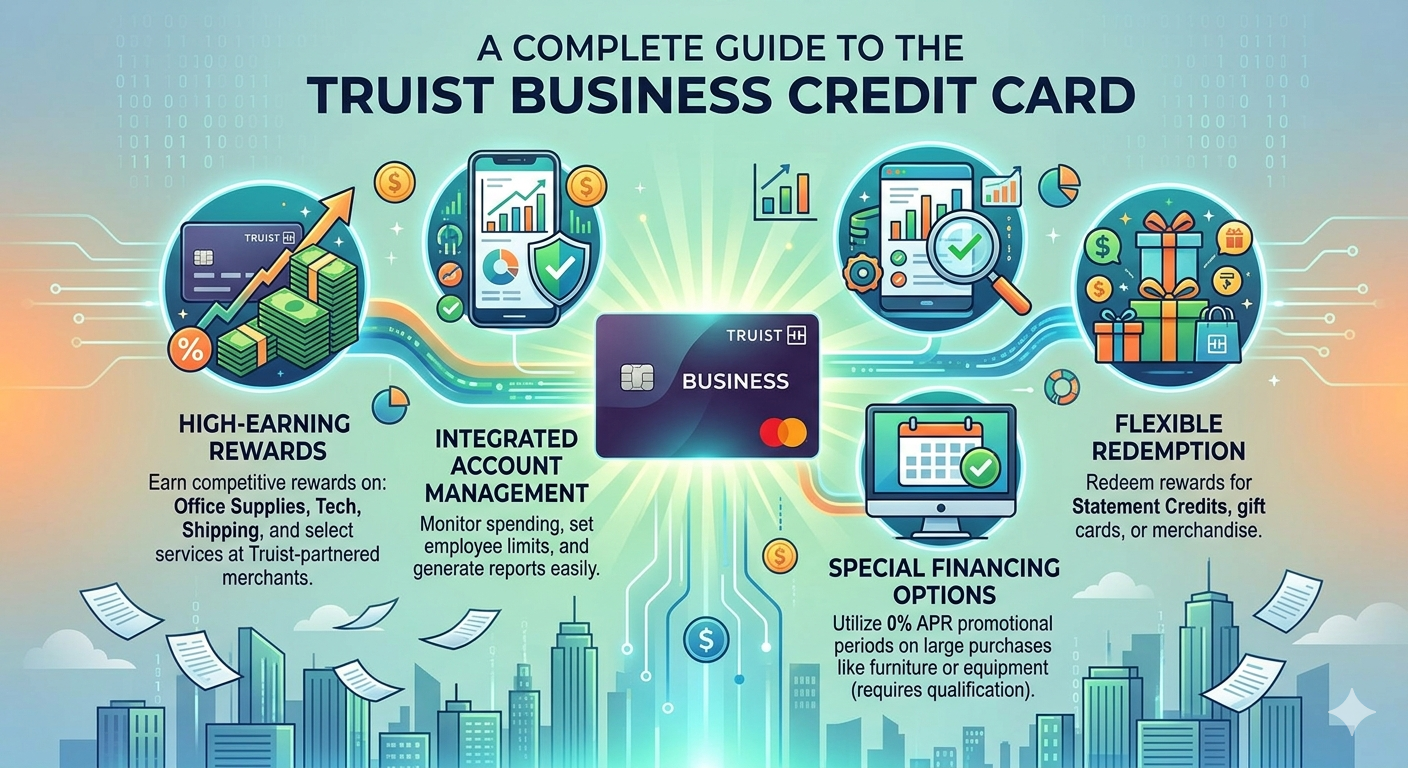
The Truist Business Credit Card is designed more around financial management and spending flexibility than luxury perks. For many small businesses and startups, that simplicity becomes more useful than premium travel rewards or aggressive cashback structures.
This guide explains how the Truist Business Credit Card works, who it fits best, its practical advantages, possible limitations, and what businesses should understand before applying.
Why Many Small Businesses Prefer Simpler Business Credit Cards
Not every business needs premium travel benefits or complicated point systems.
Many small business owners simply want:
- Easier expense management
- Better cash flow flexibility
- Clear spending records
- Business credit building opportunities
- Separation between personal and business finances
For newer businesses especially, simplicity matters more than advanced reward systems that rarely match actual spending habits.
That is where cards like the Truist Business Credit Card become relevant.
What Makes the Truist Business Credit Card Different
Some business credit cards focus heavily on rewards marketing.
The Truist Business Credit Card takes a more practical approach. It is generally built for businesses that want operational control and financial organization without unnecessary complexity.
The card mainly supports:
- Business spending management
- Operational cash flow support
- Credit-building opportunities
- Expense separation
- Short-term financing flexibility
For businesses focused on day-to-day financial control, those features are more valuable than premium perks.
Expense Tracking Becomes Easier Over Time
As businesses grow, tracking operational spending manually becomes difficult.
Business owners struggle to organize:
- Employee purchases
- Monthly subscriptions
- Vendor payments
- Travel expenses
- Operational costs
Using a dedicated business card creates cleaner transaction records and improves financial visibility.
That structure helps businesses:
- Reduce bookkeeping confusion
- Review spending patterns faster
- Simplify accounting processes
- Improve budgeting accuracy
Over time, organized financial tracking saves businesses far more time than many owners initially expect.
The 0% Introductory APR Can Help During Growth Phases
Some Truist business credit card options may include introductory 0% APR periods for eligible purchases.
For businesses managing temporary operational pressure, that flexibility can help significantly.
Instead of using immediate working capital, businesses may spread certain costs across the promotional period without interest building immediately.
That becomes useful for:
- Equipment purchases
- Software expenses
- Inventory costs
- Business setup expenses
- Marketing investments
However, businesses should still create repayment plans before the promotional period ends.
Building Business Credit Matters Earlier Than Most Owners Think
Many startups focus only on revenue growth during early stages.
But building business credit early becomes equally important later.
A properly managed business credit card may help businesses establish stronger financial credibility over time.
That may eventually support:
- Better financing approvals
- Higher business credit limits
- Improved lender confidence
- Easier operational financing access
The key factor is responsible usage and consistent repayment history.
Separating Business and Personal Spending Reduces Financial Problems
One common issue among small business owners is mixing business and personal expenses together.
That creates confusion during:
- Tax preparation
- Expense tracking
- Financial reporting
- Budget planning
A dedicated business card helps create cleaner operational separation.
Businesses gain:
- Better financial visibility
- Easier bookkeeping
- Improved operational transparency
- More professional financial management
This becomes especially important once businesses start growing beyond solo operations.
Approval Requirements Are More Accessible
Premium business cards sometimes require stronger business history or higher revenue levels.
The Truist Business Credit Card is generally viewed as more accessible for smaller businesses and startups compared to premium corporate-focused products.
Most applications require:
- Basic business information
- Personal identification details
- Estimated business spending
- Tax information if applicable
That simpler process appeals to newer business owners still building financial history.
Potential Drawbacks Businesses Should Understand
No business credit card works perfectly for every company.
Businesses should understand possible limitations before applying.
Lower Starting Credit Limits
Newer businesses or applicants with limited history may receive smaller initial limits.
That may restrict larger operational purchases early.
Additional Verification Requests
Some businesses may experience extra verification steps during underwriting.
This is more common with startups or sole proprietors.
Fraud Protection Delays
Security systems occasionally flag legitimate purchases for verification.
While protective overall, it may temporarily interrupt urgent transactions.
Limited Premium Rewards
Businesses looking mainly for luxury travel perks or large cashback systems may find other cards more suitable.
The Truist Business Credit Card focuses more on operational practicality than premium rewards.
Who Benefits Most From the Truist Business Credit Card
This card generally fits businesses looking for:
- Simple expense management
- Operational spending control
- Short-term financial flexibility
- Business credit building
- Cleaner financial organization
It may work especially well for:
- Small businesses
- New startups
- Solo business owners
- Service-based companies
- Businesses managing uneven cash flow
The value comes more from financial organization than aggressive reward optimization.
Smart Ways Businesses Use the Card
Businesses using the card effectively focus on controlled operational spending rather than unnecessary borrowing.
Common practical uses include:
- Managing recurring business subscriptions
- Covering temporary operational expenses
- Tracking employee purchases
- Organizing vendor payments
- Handling short-term business costs
The most successful users generally treat the card as a management tool rather than additional income.
Conclusion
The Truist Business Credit Card works best for businesses that value financial organization, spending control, and operational flexibility over complicated rewards systems. For many smaller businesses, that straightforward structure becomes more practical long term.
Instead of focusing heavily on premium perks, the card supports cleaner expense management, short-term financial flexibility, and business credit development.
Businesses considering any credit solution should focus first on how the card supports daily operations rather than only promotional features.
For businesses looking to simplify payment operations and manage transactions more efficiently, High Risk Pay Merchants provides secure payment processing solutions designed to support smoother financial management and long-term business operations.
FAQs
Is the Truist Business Credit Card good for startups?
Yes. Many startups prefer it because of its simpler structure and accessible approval process.
Does the card help build business credit?
Responsible usage and consistent payments may help businesses strengthen their credit profile over time.
Is the Truist Business Credit Card mainly focused on rewards?
No. It focuses more on operational simplicity and financial organization than premium rewards.
Can businesses separate employee spending?
Yes. Business cards help businesses track operational expenses more clearly.
Does the card offer 0% APR promotions?
Some eligible card options may include introductory APR offers depending on terms and qualification.
Is the card useful for everyday business expenses?
Yes. Many businesses use it mainly for operational purchases and recurring business spending.