What Are ACH Payments? A Complete Guide for Modern Businesses
In today’s fast-moving business world, offering flexible payment options is no longer optional—it’s essential. Customers expect convenience, security, and multiple ways to pay. While credit and debit cards remain popular, many businesses are now adopting ACH payments as a smarter and more cost-effective alternative.
ACH (Automated Clearing House) payments have grown rapidly over the years, processing billions of transactions annually. From payroll deposits to subscription billing, ACH has become a reliable backbone for digital payments. But what exactly are ACH payments, and should your business start using them? Let’s explore everything in a simple and practical way.
How ACH Payments Work
ACH payments are electronic bank-to-bank transfers that move money directly between accounts. Unlike card payments that rely on card networks, ACH transactions are processed through a centralized network.
Here’s how the process works:
- A customer or business initiates a payment request
- The sending bank verifies account details and ensures sufficient funds
- Transactions are grouped and processed in batches
- The receiving bank accepts the payment and deposits funds
Although ACH payments are not always instant, many transactions are now processed within the same day or next business day, making them faster than before.
Types of ACH Payments
There are two primary types of ACH payments that businesses commonly use:
1. Direct Deposits
Direct deposits involve sending money into a bank account. This is widely used for:
- Employee salaries and wages
- Vendor or supplier payments
- Tax refunds or reimbursements
2. Direct Payments
Direct payments allow businesses to pull money from a customer’s bank account with their authorization. These are commonly used for:
- Subscription services
- Monthly bills (utilities, rent, insurance)
- Loan or EMI repayments
Both types are secure, efficient, and widely accepted across industries.
ACH vs Wire Transfers: Key Differences
ACH payments and wire transfers both help move money between banks, but they differ in speed, cost, and use cases.
- ACH payments are processed in batches, making them slower but highly affordable
- Wire transfers are processed individually and almost instantly, but they come with higher fees
For most day-to-day business transactions—especially recurring or high-value payments—ACH is the more cost-effective choice. Wire transfers are better suited for urgent or international transactions where speed is critical.
Benefits of ACH Payments for Businesses
Adding ACH payments to your business can offer several advantages:
Lower Transaction Costs
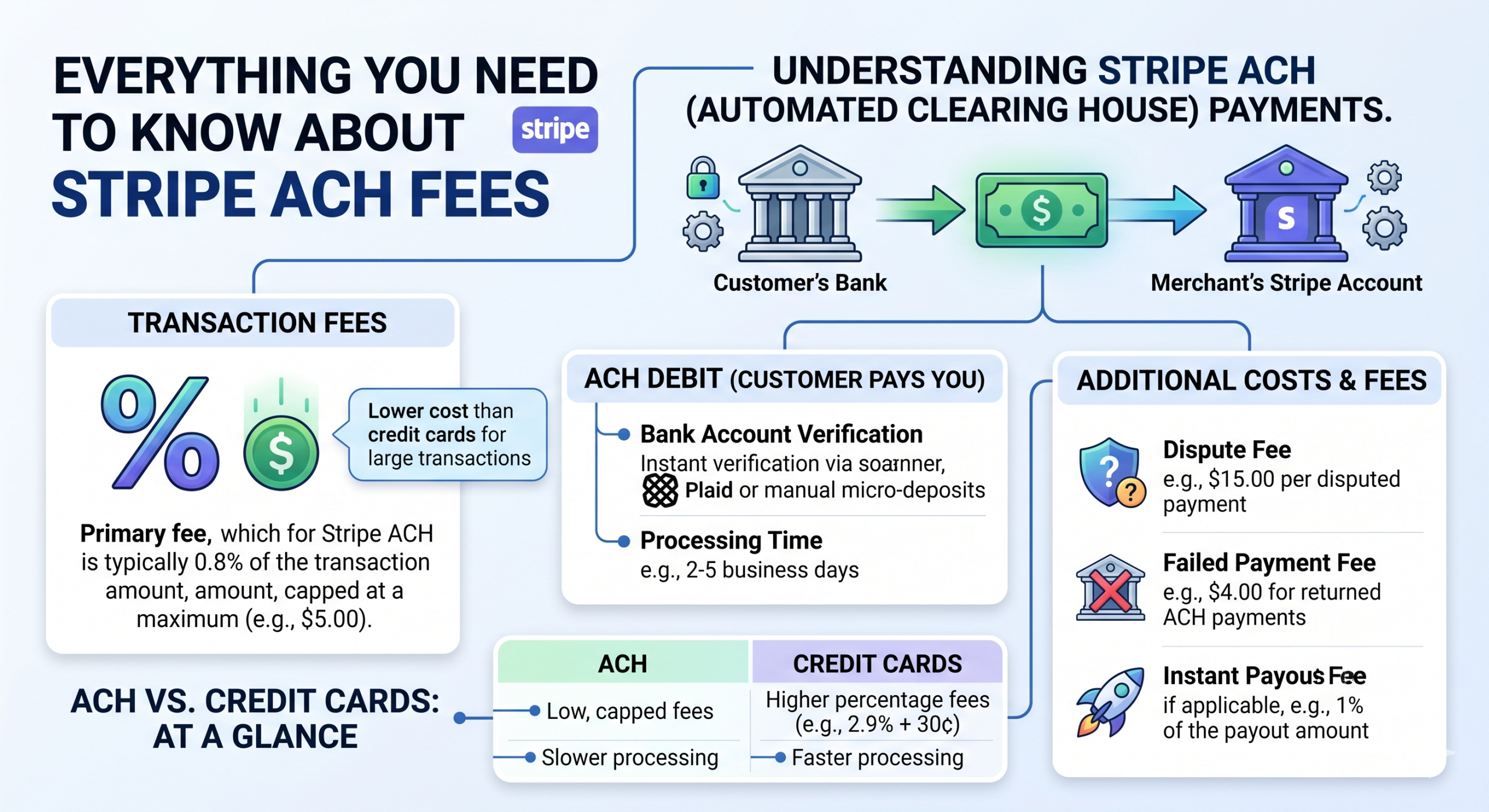
ACH fees are significantly lower than credit card processing fees. Many providers charge a small percentage with a capped fee, making it ideal for large transactions.
Improved Cash Flow
With automated and recurring payments, businesses can better predict revenue and reduce delays in receiving funds.
Enhanced Security
ACH payments use bank-level verification and encryption, reducing fraud risks and unauthorized transactions.
Fewer Chargebacks
Compared to credit cards, ACH transactions generally have fewer chargebacks, helping businesses avoid unnecessary losses.
Perfect for Recurring Billing
ACH is ideal for subscription-based businesses, membership services, and any model that requires regular payments.
How to Start Accepting ACH Payments
Getting started with ACH payments is straightforward. Here’s a step-by-step guide:
- Open a business bank account if you don’t already have one
- Choose a reliable payment processor that supports ACH transactions
- Collect customer bank details securely
- Obtain proper authorization to debit their accounts
- Start accepting payments and automate billing if needed
Most businesses rely on payment providers to handle compliance, encryption, and processing, making the entire setup smooth and hassle-free.
What Does ACH Payment Processing Cost?
One of the biggest reasons businesses prefer ACH payments is affordability.
- Fees are usually a small percentage per transaction
- Many providers offer capped fees, especially beneficial for high-value payments
- Overall, ACH is much cheaper than card processing
However, pricing may vary depending on your payment provider, transaction volume, and business type.
Final Thoughts
ACH payments are a powerful tool for businesses looking to reduce costs, improve efficiency, and offer better payment flexibility. They are secure, reliable, and especially useful for recurring billing and large transactions.
As your business grows, having the right payment system in place becomes crucial. Choosing a trusted provider like High Risk Pay Merchant can help you seamlessly integrate ACH and card processing solutions tailored to your needs.
In the long run, adopting ACH payments isn’t just about saving money—it’s about building a smoother, more efficient payment experience for your customers.
A small upgrade in your payment system today can lead to bigger financial efficiency tomorrow.